|
| For the
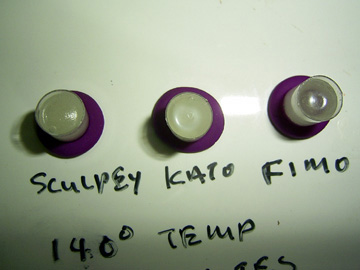
tests I filled three miniature glass bottles with different types
of liquid clay and also pour the liquids on the glass surface.
The tests is baked in the oven for 45 minutes at 150ºC. |
|
 |
| After
baking the tests on the glass panel, it is placed on Sculpey
clay brochure to compare the transparency of the various types
of liquid clay. |
|
 |
| The miniature
glass bottle size is 18mm high by 15mm in diameter. |
|
 |
| To test
for transparency of the liquid, a small purple polymer clay ball
are put into all the bottles. |
|
 |
| Observing
the cure Sculpey liquid in the bottle, we can barely see the
polymer ball. The bottles is filled with tiny bubbles in the
liquids. The expanded cured liquid is transluncent. |
|
 |
| For further
transparency test, I put a LED touch light behind the bottle,
test result is the same the cured Sculpey liquid is translucent. |
|
 |
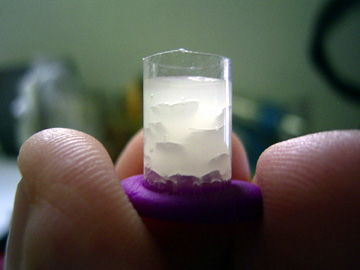
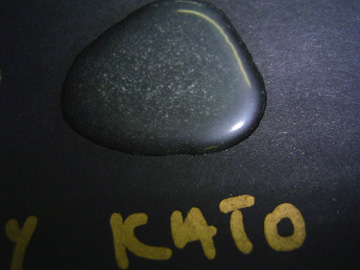
| The next
test bottle is Kato Liquid, noticed the cure liquid is smooth
and greenish yellow in color, we can vaguely see the polymer
clay ball. The cured Kato Liquid is transluncent. |
|
 |
| Under
the LED tourch light there are cracks on the cured liquid horizontally.
The cured liquid is translucent and not transparent. |
|
 |
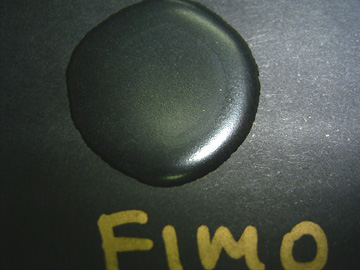
| The test
at 150ºC temperature for 45 minutes shows bubbling in the
cured liquid, the clay polymer ball is visible but blurred by
tiny bubbles, it is much more transparent in compare to Kato
Liquid. |
|
 |
| Under
the torch light you can see the position of the polymer clay
ball, the blurry effects is cause by bubbling during the process
of curing of the liquid clay. At 150ºC temperature, it is
not the suitable to bake the Fimo liquid. |
|
 |
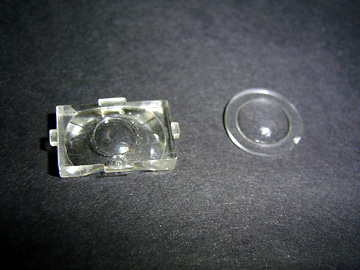
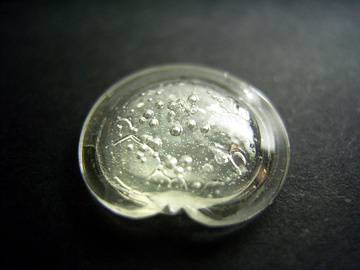
| Using
the cured Sculpey Liquid on glass as lens, we can see that the
images is very blurry. |
|
 |
| Kato
Liquid lens is much clearer, detail of the images can be seen. |
|
 |
| Fimo
Liquid lens is also much clearer, detail of the images and wording
can be seen. |
|
 |
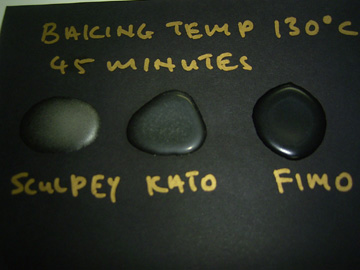
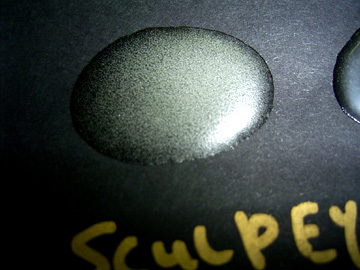
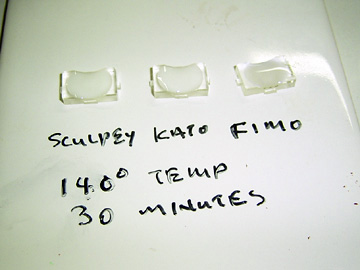
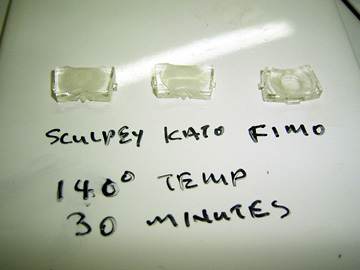
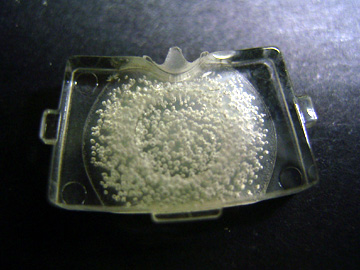
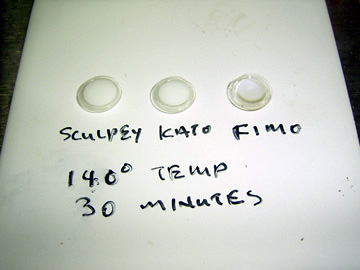
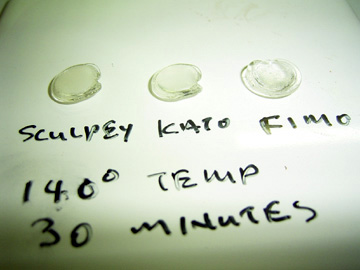
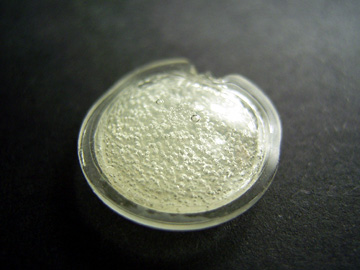
| Testing the
Sculpey liquid lens against the sunlight, the lens is blurry,
caused by tiny bubbles during curing. It does not matter whether
you are setting the temperature at 130ºC, 140ºC or
150ºC, baking thickness between 1mm to 2mm, within 30 minutes,
the result are the same. |
|
 |
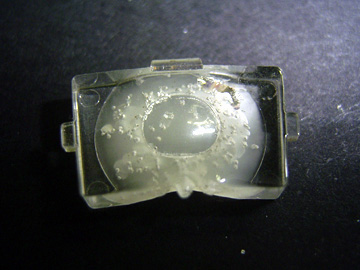
| Testing
the Kato Liquid lens, it is very clear, 150ºC is the suitable
temperature for baking the liquid clay between 1mm to 2mm thickness. |
|
 |
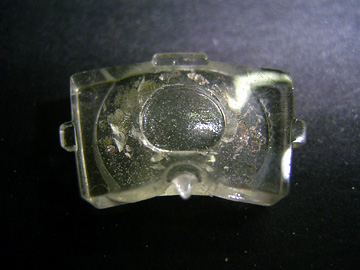
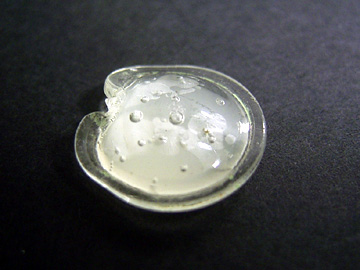
| Fimo
liquid lens is not as clear as Kato Liquid lens, although it
is transparent, 150ºC temperature is not suitable to bake
Fimo Liquid from 1mm thickness as high temperature causes the
liquid clay to bubbles and distort the llquid lens. |
|